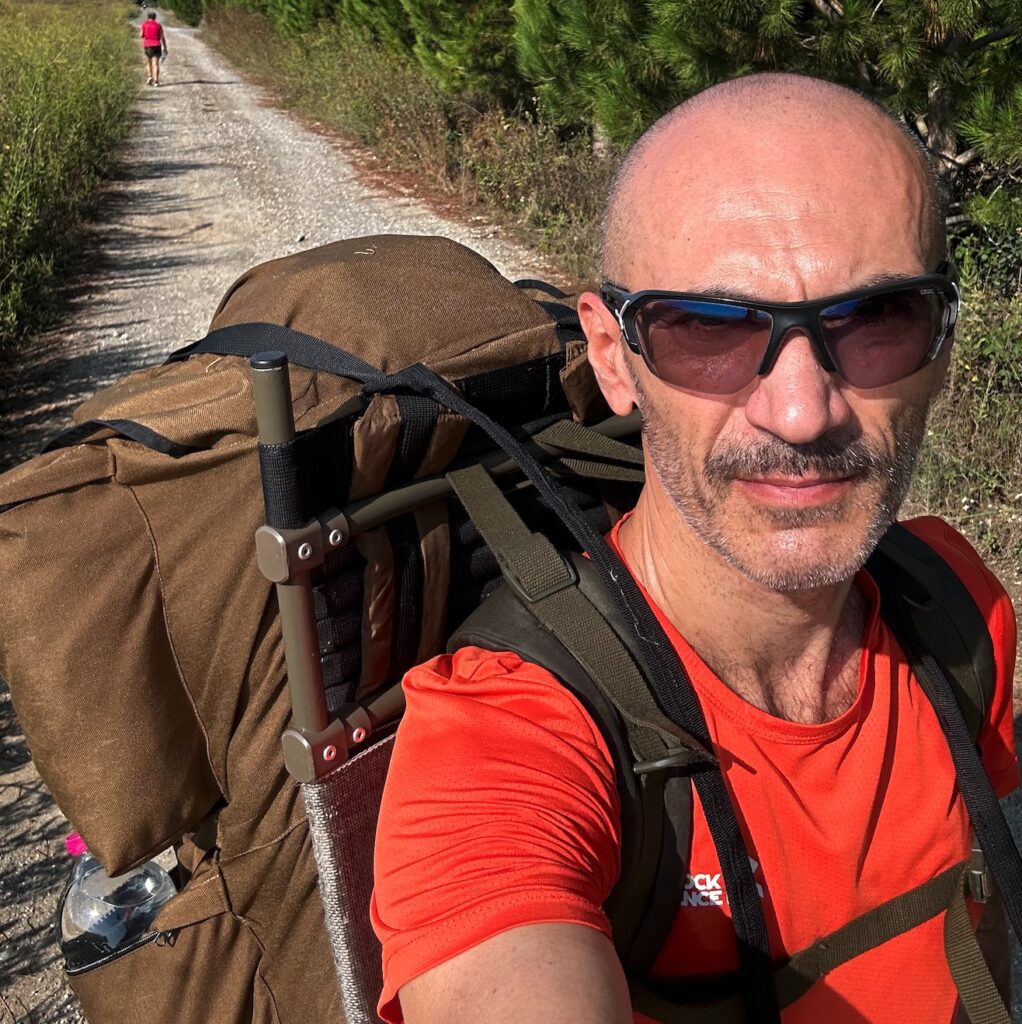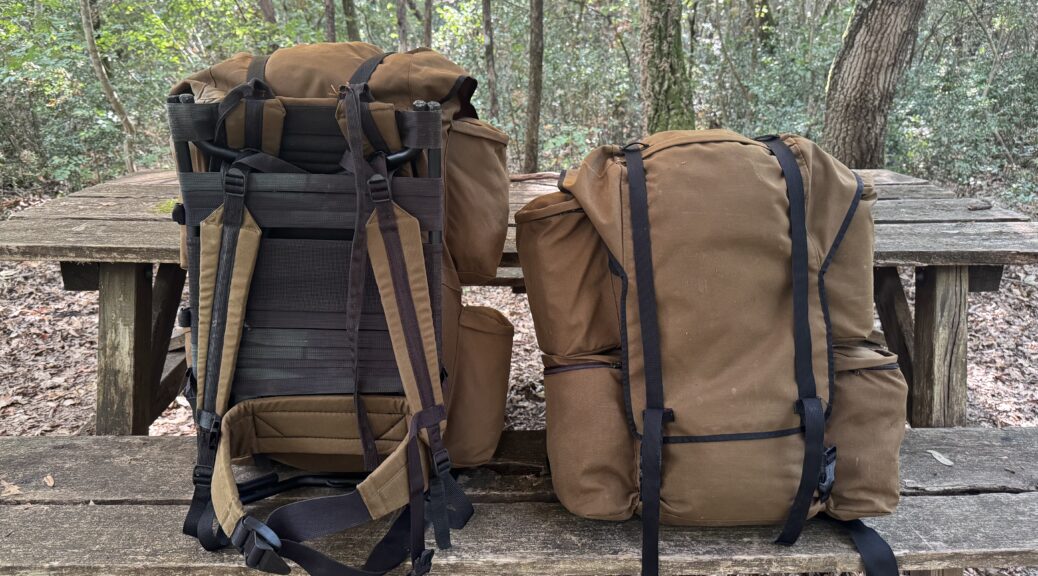
The Pattern 83 Grootsak
The Pattern 83 Grootsak is the rucksack used by the South African Defence Force in the 1980s. “Grootsak” means “big bag” in Afrikaans, while “Pattern 83” clearly refers to the year it was adopted.
During the 1980s, South Africa was involved in several conflicts against communist-backed armed movements operating in Angola, Zambia, Botswana, Zimbabwe and Mozambique.
At that time, South Africa was under an international arms embargo, making it impossible to purchase military weapons and equipment abroad. As a result, the country began designing and manufacturing its own equipment.
The Pattern 83 load-carrying system was developed as part of this effort.
It consisted of a combat vest, intended for short-range and short-duration patrols, and a large rucksack designed to be used together with a dedicated chest rig.
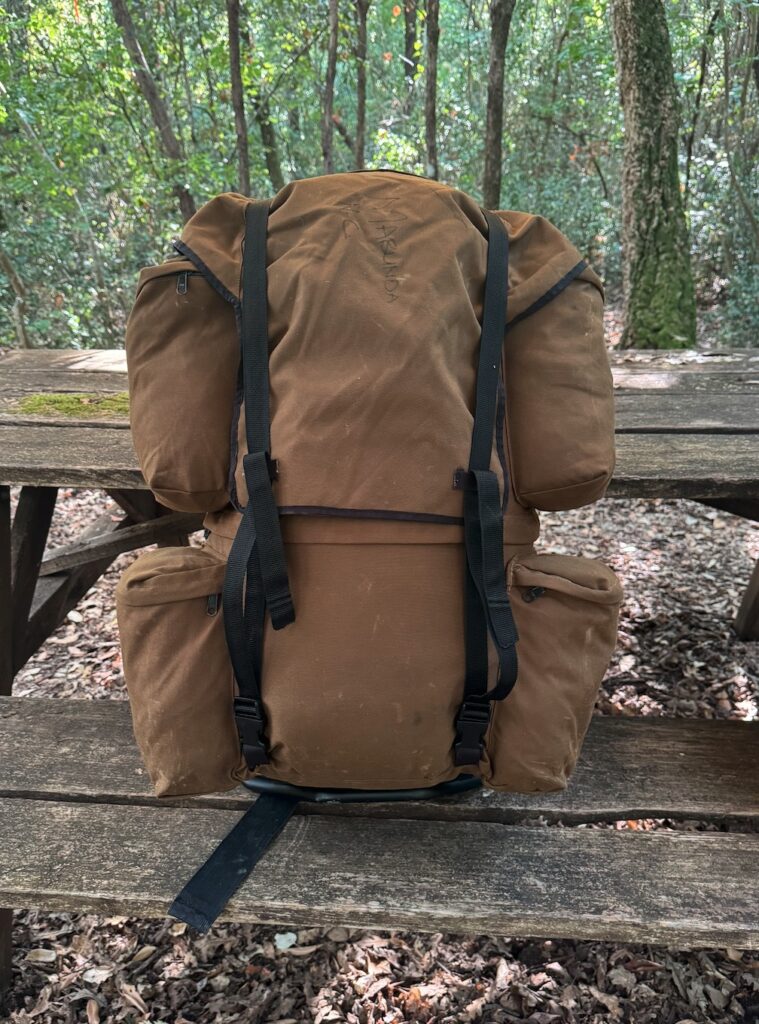
The backpack was intended for long-range, long-duration patrols, where no logistical support was available and soldiers had to carry everything they needed with them.
For its time, the entire system was remarkably advanced.
The equipment was made from high-density Cordura nylon, with Fastex plastic buckles, and nylon webbing.
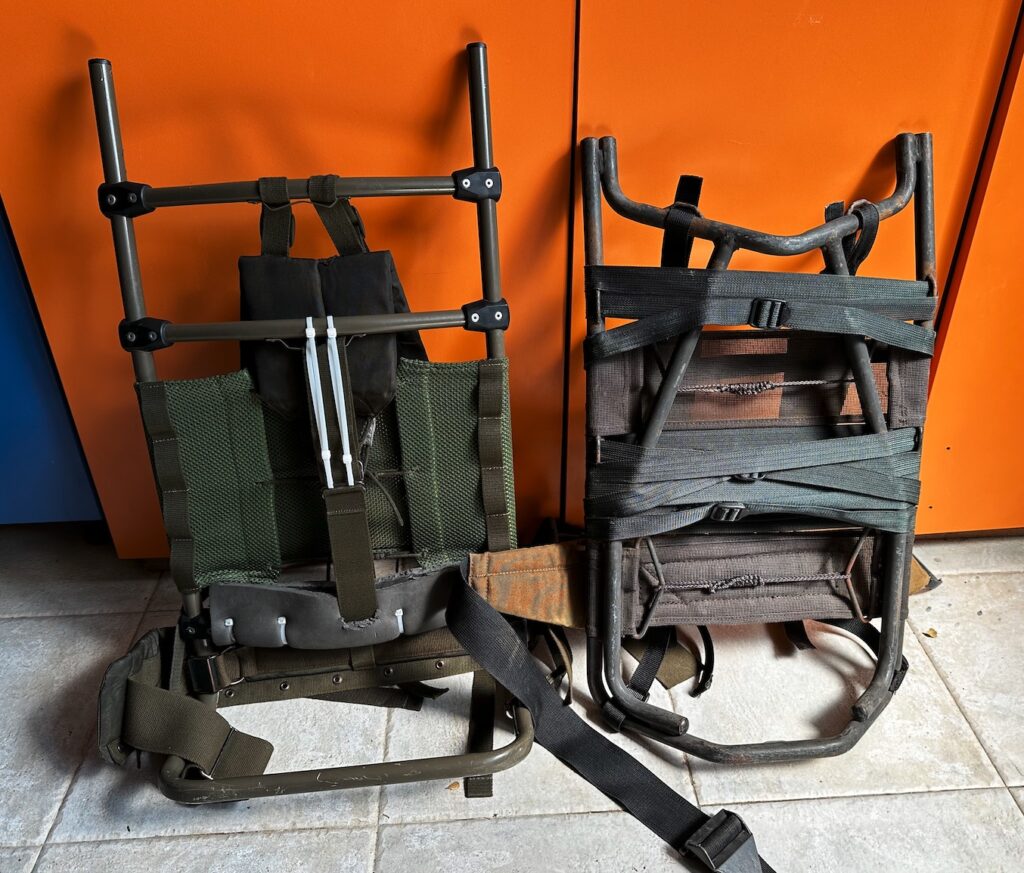
The complete system consists of two main components: a steel H-frame and the rucksack itself.
The bag comes with its own shoulder straps and waist belt, making it perfectly usable without the external frame. In fact, it appears that many soldiers preferred using it this way to avoid carrying the extra weight of the frame.
As I mentioned earlier, the frame is quite heavy.
It uses the same shoulder straps as the bag, while the back support is provided by mesh panels stretched between the two sides of the frame.
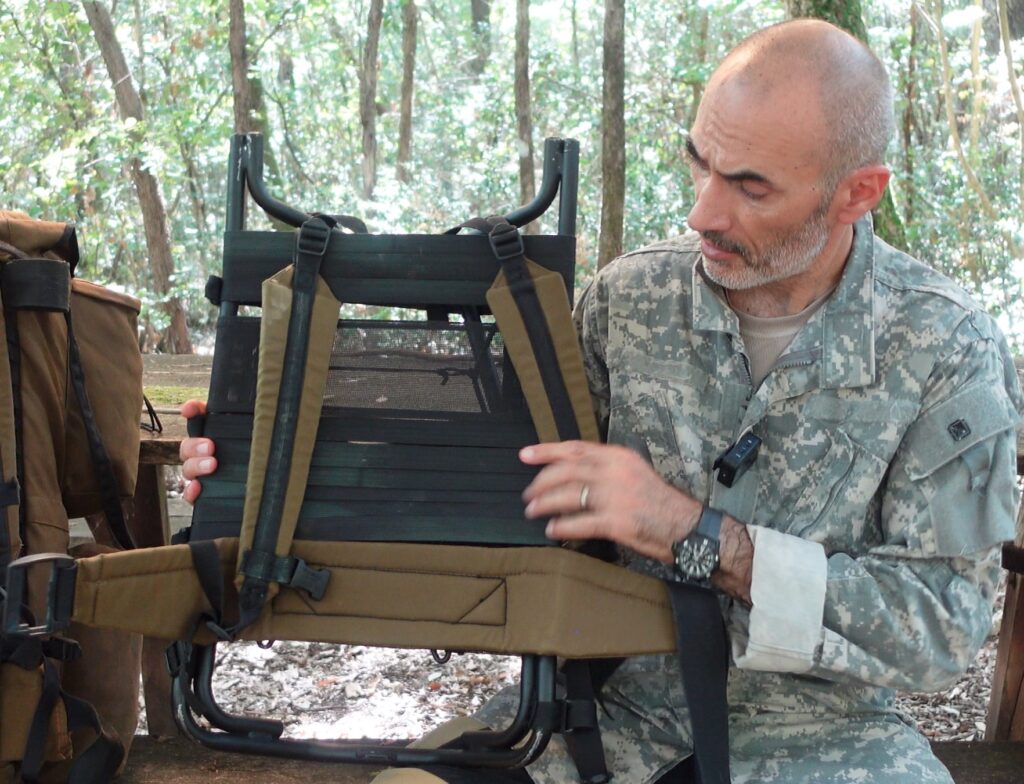
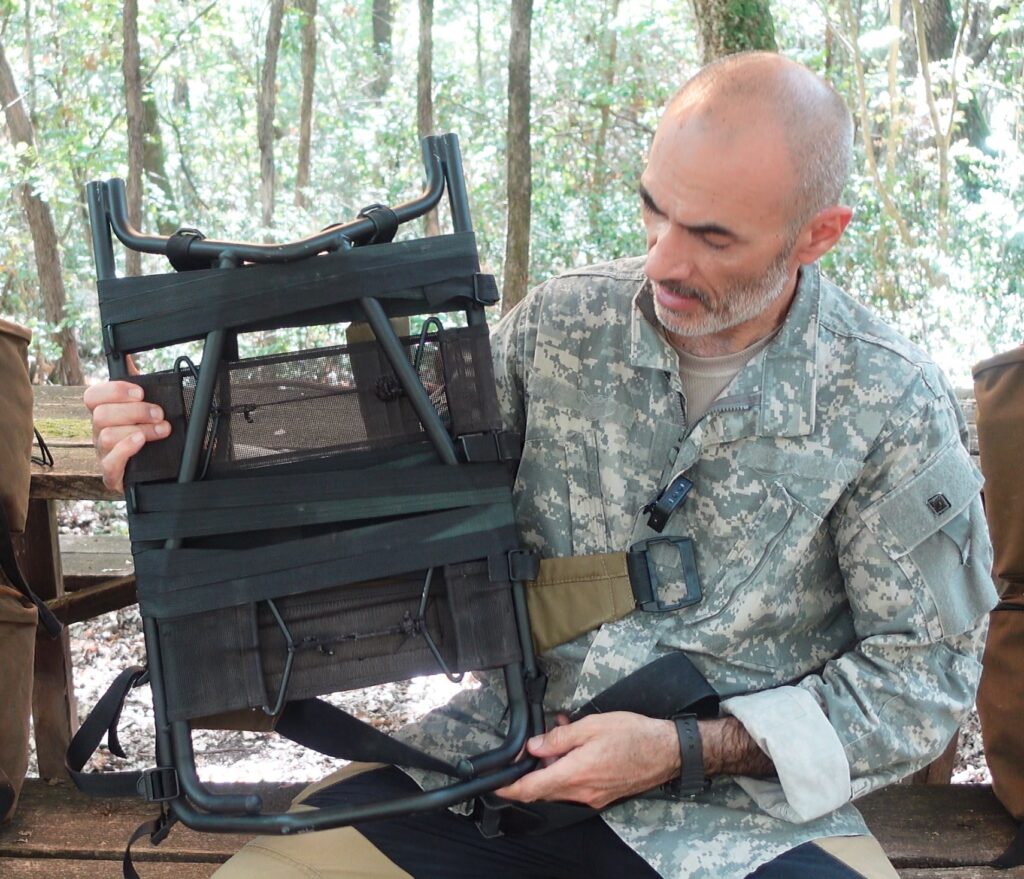
Interestingly, the mesh is tensioned using simple cords, which means you can tighten them using whatever knot you prefer.
The bag has a capacity of approximately 70 litres.
In my opinion, it’s very similar in size to the MOLLE II Large Pack.
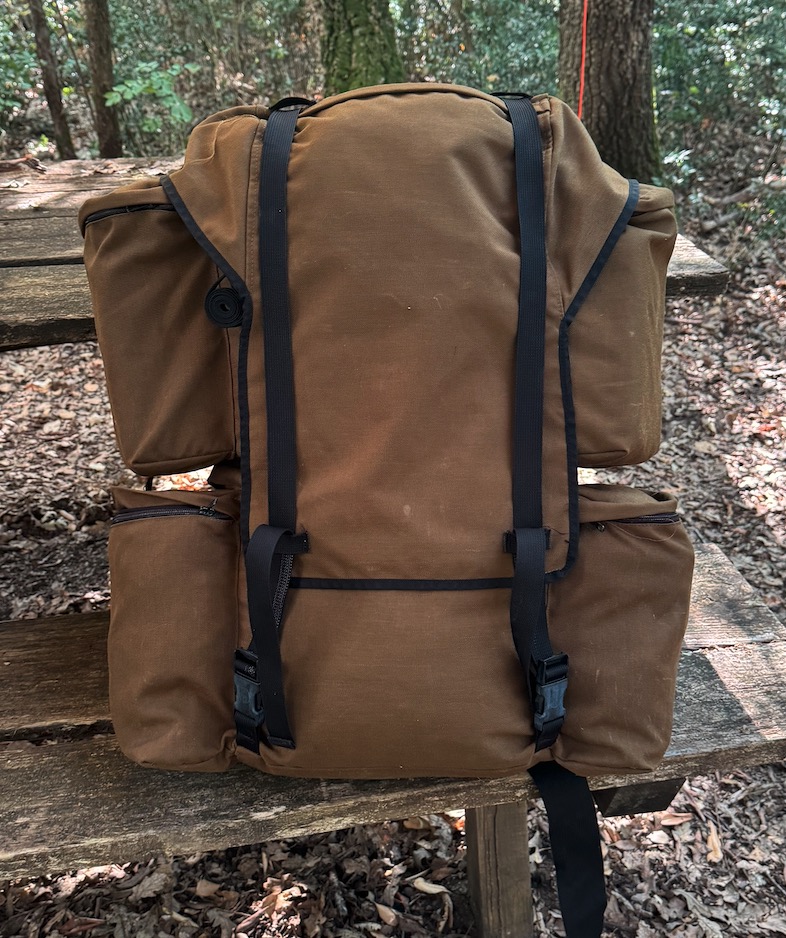
The body is made from rugged 1000-denier Cordura in the characteristic nutria brown colour, with a water-resistant coating.
Apparently, the backpack was also produced in green, but nutria brown became the standard colour for South African military uniforms and equipment.
The main compartment is divided into an upper and a lower section, with a zip running around the middle to provide direct access to the lower compartment.
The divider between the two compartments includes two openings that allow long items, such as tent poles or a long folding saw, to pass through.
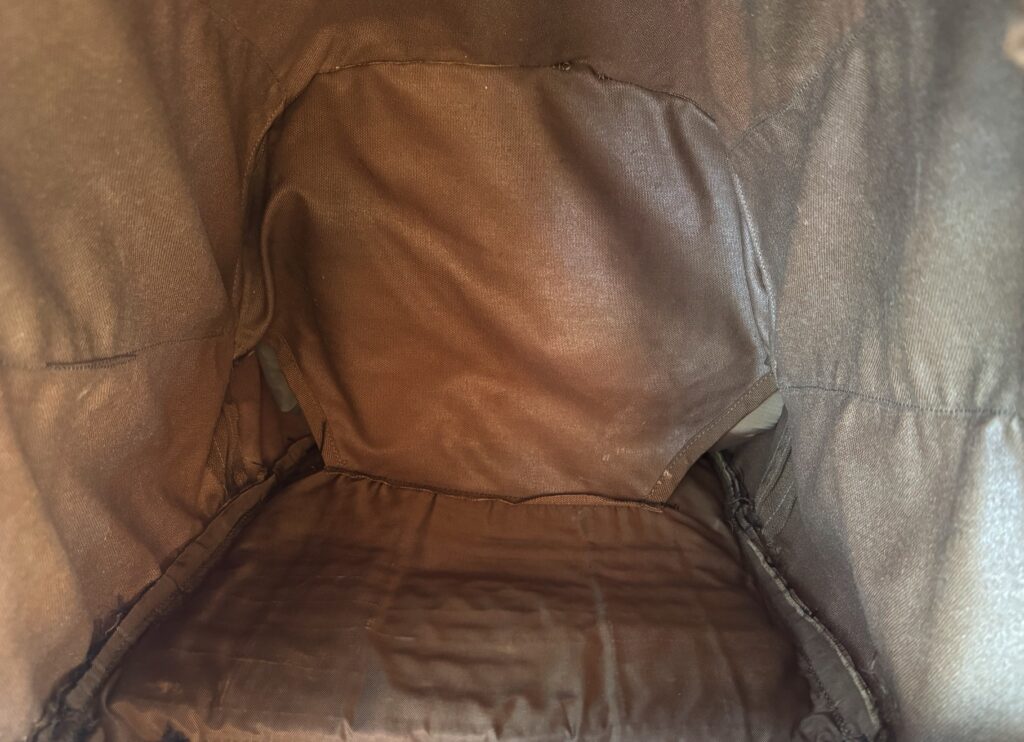
There are four large side pouches, two on each side, each capable of holding a two-litre water bottle.
On the front, there is a sturdy grab handle and two compression straps for securing additional equipment, such as a sleeping mat or even a LAW rocket launcher.
The main compartment isn’t closed by a tall drawstring collar like most modern backpacks. Instead, it’s protected by a large top flap featuring a spacious zippered pocket.
Neither of my backpacks came with a cord lock on the drawstring, so it has to be secured with a simple knot.
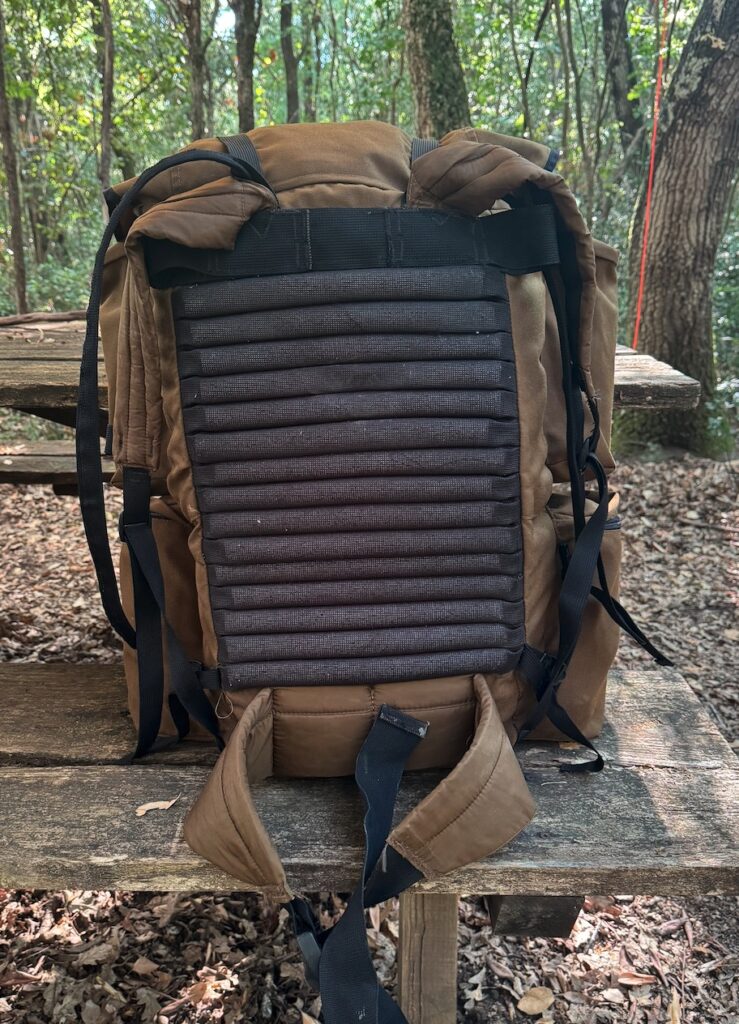
The back panel consists of several horizontal padded tubes that provide excellent comfort.
However, because they rest directly against the back, airflow is limited compared to modern trekking backpacks.
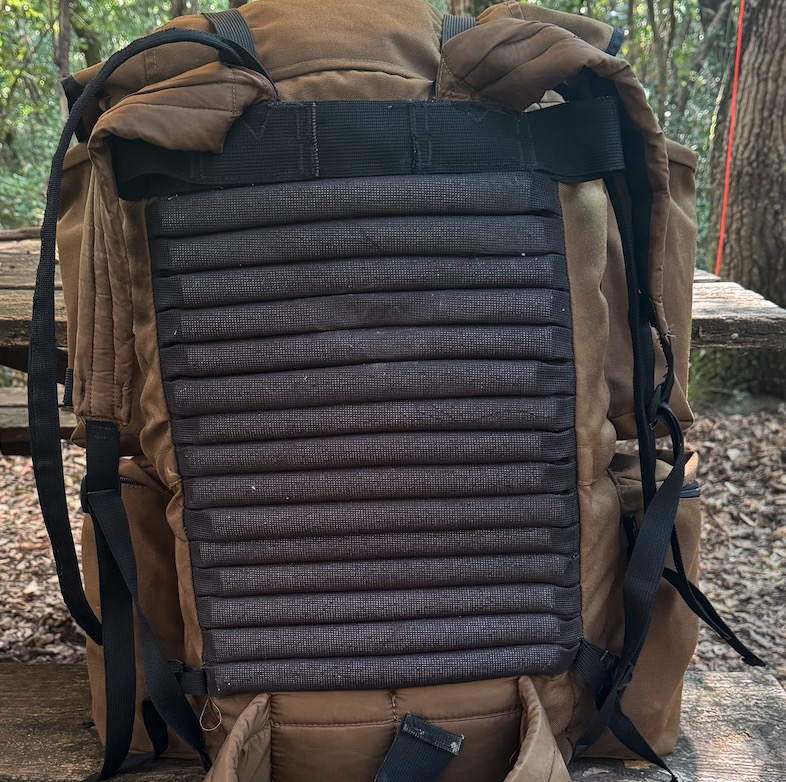
The shoulder straps aren’t particularly thick or heavily padded, yet during several rucking sessions carrying 25 kilograms, I experienced no shoulder pain or discomfort.
The waist belt uses a Fastex buckle, is easy to adjust, and transfers a significant portion of the load onto the hips.
At the top of the bag, two reinforced loops allow it to be attached securely to the external frame.
I bought my first Grootsak from the Finnish retailer Varusteleka. It was sold without the frame, but it arrived in excellent condition.
A few months later, I purchased a complete set—including both the bag and the frame—from an online store in South Africa.
If you’re planning to do the same, be prepared for extremely high shipping costs and customs fees.
In my case, they ended up costing more than the backpack itself.
The frame arrived heavily rusted, so I had to sand it down completely and repaint it.
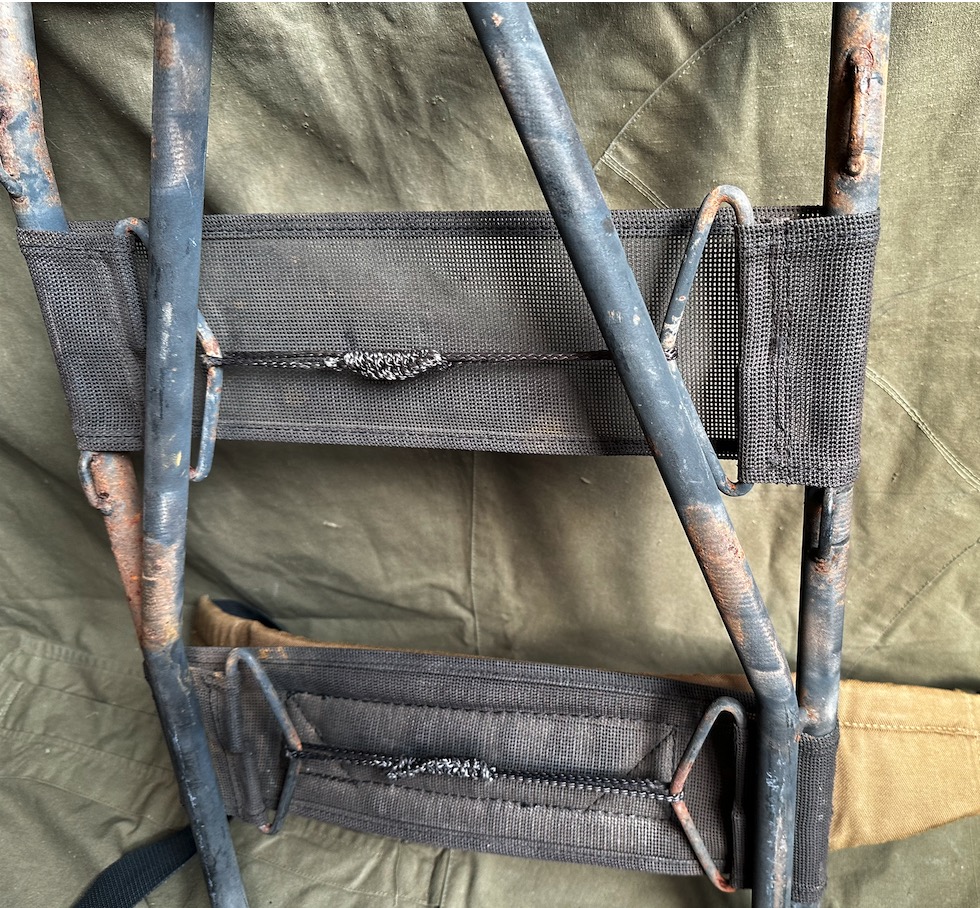
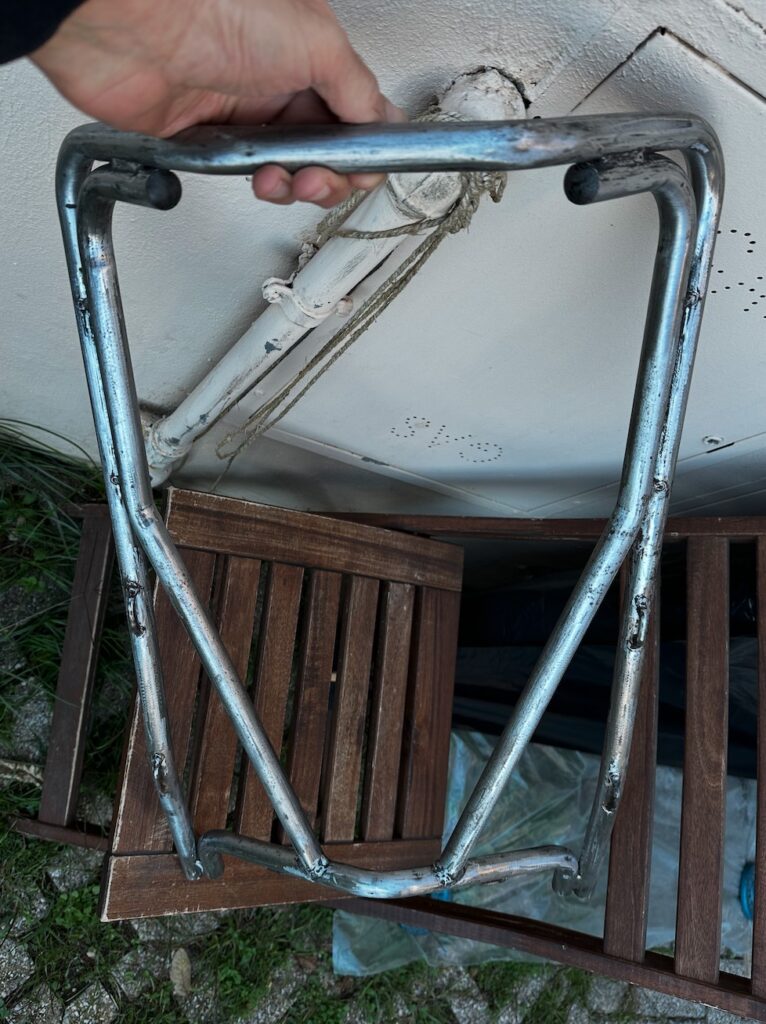
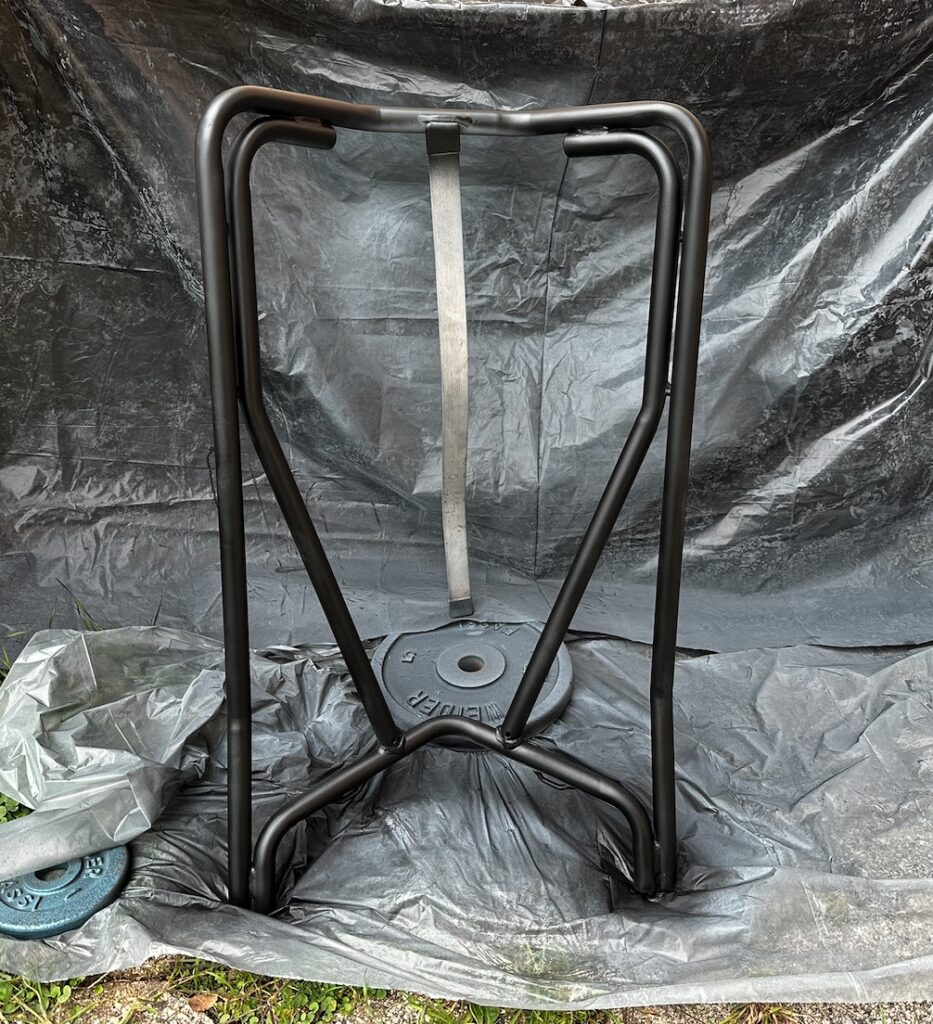
Unfortunately, I didn’t use military-grade paint, so the finish scratches and chips quite easily.
The bag itself had several field repairs and a few open seams.
The previous owner had removed the padding from both the waist belt and the divider between the upper and lower compartments.
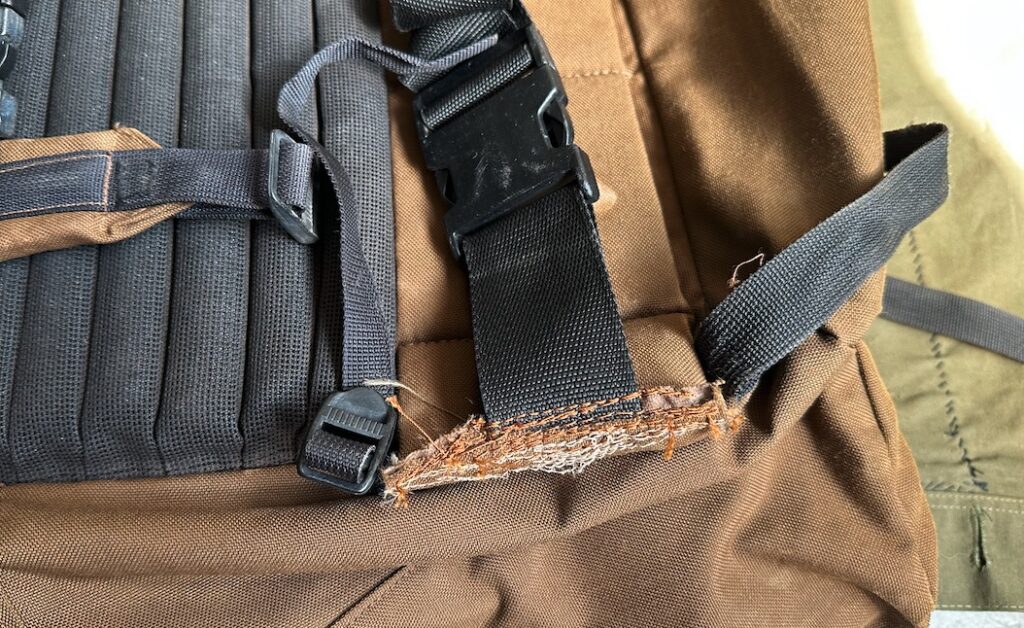
After using the backpack myself, I think I understand why he removed the divider.
When both compartments are fully packed, reaching gear stored in the lower section isn’t particularly easy.
The bag alone weighs approximately 1.8 kilograms, making it surprisingly light.
Considering its capacity—about 70 litres, or roughly 77 litres including the side pouches—I’d say it’s something of an ultralight predecessor to today’s military rucksacks. Of course, the complete system lacks many of the features we’ve come to expect today.
There’s no hydration bladder compartment, no MOLLE/PALS webbing for attaching extra pouches, and none of the modularity found on modern military packs.
Even so, I still think it’s an excellent choice for heavy-duty outdoor use.
I’ve already used it during several rucking sessions, and once autumn arrives, I plan to take it on a few trekking trips, both with and without the external frame.
It’s also worth mentioning that the bag can be mounted on other external frames.
For example, I attached mine to the frame of a 90-litre Austrian Army backpack, and it fitted surprisingly well.